
When a Republic Fights Itself — Part 2
What Does Minneapolis Have to Do with National Security?

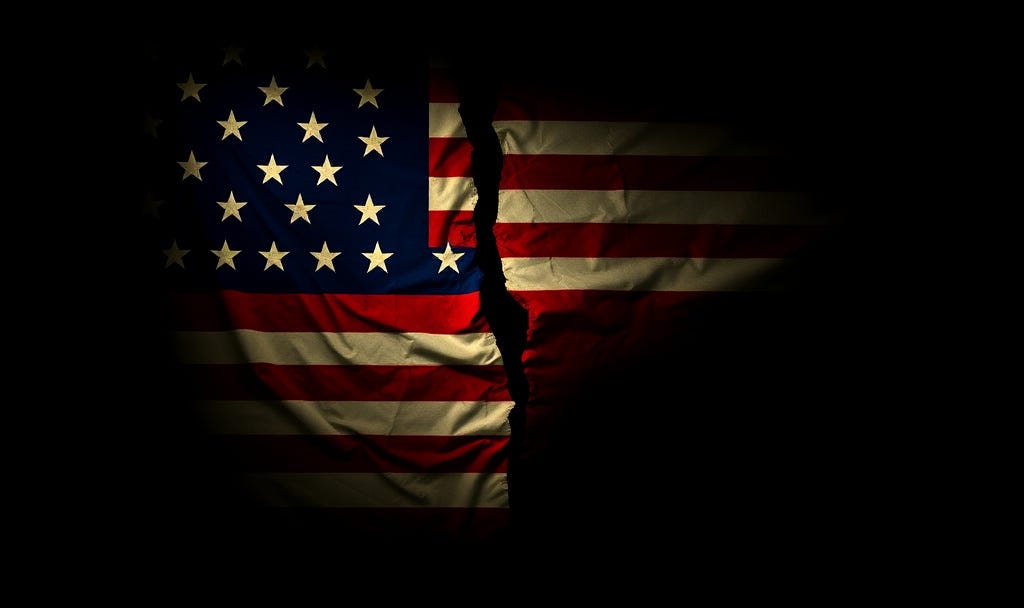
What Does Minneapolis Have to Do with National Security?
In Part 1, I shared the tension I’m navigating—between rage and strategic patience, between the urgency of this moment and the discipline required for the long fight ahead. As I sat with the question of what to write next, I kept coming back to an argument I’ve made throughout my career and, more recently, here on Reconnecting the Republic: legitimacy is a strategic asset. What is unfolding in Minneapolis is not merely an immigration enforcement tragedy—it’s an assault on the foundations of that asset.
Let me explain in simple terms why this is a national security crisis, not despite its domestic character, but precisely because of it.
Legitimacy is a Strategic Asset
Security is not only about military capacity or border enforcement. It’s about securing consent—the belief among citizens that their government acts lawfully, respects rights, and operates in the public interest. When federal enforcement actions are perceived as arbitrary, abusive, or dishonest, that consent erodes.
Legitimacy is what allows governments to mobilize resources, sustain public support during crises, and project credible commitments abroad. When legitimacy fractures at home, everything else becomes harder.
For a mother in South Minneapolis right now, that erosion is not abstract. It shows up in the calculation she makes before leaving the house each morning: Is today the day armed strangers decide my family looks like a target? That question—once unthinkable—is now part of daily life for thousands of Americans.
The daily business of earning a living, caring for loved ones, getting kids to school, a quick run to the grocery, a night out on the town, and moving freely from place to place—all of it becomes fraught. Our sense of personal safety has become a question. Am I safe? If trouble finds me, who can be trusted to help?
Constitutional Norms Are the Foundation of Stability
Due process. The right to protest. Protections against unreasonable searches and the use of excessive force. These are not peripheral to national security—they are its foundation. They create predictability. They restrain the arbitrary exercise of power. They signal to citizens and allies alike that the United States operates within a framework of law, not raw assertion of authority.
When those norms are compromised, the boundary between security and coercion blurs. And once that boundary is blurred, it becomes nearly impossible to restore without deliberate, sustained effort.
When enforcement agencies act without published guidelines, and senior officials defend actions that video evidence contradicts, ordinary citizens lose the ability to predict what behavior is safe. That unpredictability is not chaos by accident—it’s chaos by design, and it corrodes the very idea of lawful society.
Our Internal Fractures Signal Vulnerability to Our Enemies.
Against the backdrop of our current civil unrest, foreign adversaries do not need to breach American borders to weaken U.S. influence. They watch how this country manages internal disputes. When the rule of law can be willfully and casually set aside, when federal agents use lethal force against civilians under dubious pretenses and senior officials defend it with demonstrable falsehoods, the spectacle itself becomes a tool.
When, hypothetically, Russian state media broadcasts footage of American citizens shot by federal agents on American streets—and our own officials lie about what happened—Moscow and Beijing don’t need to manufacture propaganda. We’re providing it ourselves, in real time, with an official imprimatur.
Adversaries point to it. Allies question it. And the moral authority the United States has historically wielded—however imperfectly—diminishes in real time.
Our Strategic Vulnerability Mirrors Our Domestic Break
The same dynamic applies domestically. Many Americans now actively wonder whether our Constitutional guarantees mean what they once did. When enforcement agencies act without clear accountability, and senior officials defend abuses rather than investigate them, citizens hedge as well. They lose trust. They organize outside formal channels because they no longer believe those channels will protect them.
For the small business owner in Minneapolis who has watched revenues plummet, for the parent who now walks their child to school instead of letting them go alone, for the healthcare worker who wonders if showing up to a protest could make them a target—the strategic question is simple: Can I trust this government to respect my rights? Increasingly, the answer is no.
Both internationally and domestically, the United States is burning through its reserves of legitimacy. And legitimacy, once lost, is extraordinarily difficult to rebuild.
What Next?
Legitimacy is a reservoir. It fills slowly, through consistent action aligned with principles. It drains quickly, through actions that betray those principles in full public view. What we are witnessing in Minneapolis—and in cities across the country—is a government draining that reservoir faster than most of us imagined possible.
But reservoirs can be refilled. Norms can be restored. Trust can be rebuilt—not easily, not quickly, but deliberately. In Part 3, I’ll explore what that rebuilding requires: not wishful thinking, but the disciplined, sustained work of strategic citizenship. Because the alternative—letting the republic fracture beyond repair while we wait for someone else to fix it—is not something I’m willing to accept. I don’t think you are either.
Author’s Note
This essay is my reflection on the collision between national security, civil liberties, and public trust in the United States at a moment when those tensions are no longer theoretical. As federal enforcement actions spark outrage across American cities, the stakes for our constitutional order — and our shared future as a republic — have become impossible to ignore. This piece is part of Reconnecting the Republic’s ongoing effort to bring clarity, context, and strategic literacy to a nation wrestling with itself.
— Tony Johnson
Reconnecting the Republic
February 2026
Excellent post. Legitimacy is a reservoir, slowly filled...great analogy!
Good Word and insights.